How to Explain Burleigh heads garage door services to a Five-Year-Old
How to Identify and Fix Garage Door Noise Issues in 2025
Garage doors are essential components of many homes, providing security and convenience. However, when your garage door starts making unusual noises, it can disrupt your day and indicate underlying problems. Understanding how to identify and fix garage door noise issues can save you from costly repairs and extend the life of your door. This comprehensive guide will take you step-by-step through common noise causes, diagnostic techniques, maintenance tips, and when to seek professional help for quiet, smooth operation.What Are the Common Causes of Garage Door Noise?
Garage door noise is often the result of mechanical wear, lack of maintenance, or environmental factors affecting key components. Recognising the typical sources of noise can help in targeted troubleshooting:
- Worn or dry door rollers and hinges: These moving parts frequently cause squeaking sounds if not lubricated properly.
- Rusted or fatigued springs: Torsion and extension springs that have rust or metal fatigue may lead to creaks or thumping noises.
- Misaligned or dirty tracks: Tracks that are dirty, bent, or misaligned can produce grinding sounds as the rollers struggle to move smoothly.
- Loose bolts or mounting brackets: Vibration or rattling can be due to unsecured bolts or brackets holding the door frame or rail system.
- Damaged wheel bearings or cable drums: Faulty bearings increase friction and noise during operation.
- Metal fatigue in door panels or components: Over time, worn metal parts may create unusual sounds or vibrations.
- Deteriorated door seals or weatherstripping: Loose or missing seals lead to chattering or rattling noises during windy conditions.
By understanding these common causes, you can narrow down the noise source for effective repair.
How Can You Diagnose the Type of Noise Your Garage Door Makes?
Accurately identifying the kind of noise your garage door produces is critical to selecting the right fix. Here are common noise types and their typical causes:
- Squeaking sound: Usually a sign of dry or rusty hinges and door rollers that need lubrication.
- Grinding noise: Often results from misaligned tracks, damaged rollers, or worn motor gears in the opener.
- Rattling: Caused by loose bolts, mounting brackets, or a loose operator arm making intermittent noise.
- Vibration and shaking: Can stem from unbalanced doors, worn wheel bearings, or motor issues within the garage door opener.
- Thumping noises: May indicate broken, weak, or fatigued springs and cables struggling under tension.
Listening carefully to these sounds while the door operates helps pinpoint whether the problem is mechanical, structural, or related to the opener system.
What Maintenance Steps Help Reduce Garage Door Noise?
Implementing regular maintenance is one of the best ways to keep your garage door quiet and functioning efficiently. Key steps include:
- Clean and lubricate all moving parts: Use garage door-specific lubricants or grease on door rollers, hinges, springs, pulleys, and cable drums twice annually to minimise friction and squeaking.
- Remove rust and apply inhibitors: Rust removal followed by rust-preventative sprays prolongs the lifespan of metal components and prevents future noise from corrosion.
- Tighten loose bolts and mounting brackets: Check all fasteners on the door frame, rail system, and operator arm, tightening them to eliminate rattling.
- Check spring tension: Springs should be correctly adjusted to maintain door balance, reducing strain and noise during operation. However, spring adjustment should be left to professionals for safety.
- Inspect and replace worn wheel bearings: Damaged bearings increase vibration and grinding; replacing them restores smooth movement.
- Replace old weatherstripping and door seals: New seals prevent rattling noises and improve insulation at the same time.
Adhering to a consistent maintenance schedule ensures quieter operation and prevents unexpected breakdowns.
When Should You Adjust or Replace Garage Door Springs?
Garage door springs play a pivotal role in smooth and balanced movement but may also be a major noise source when compromised:
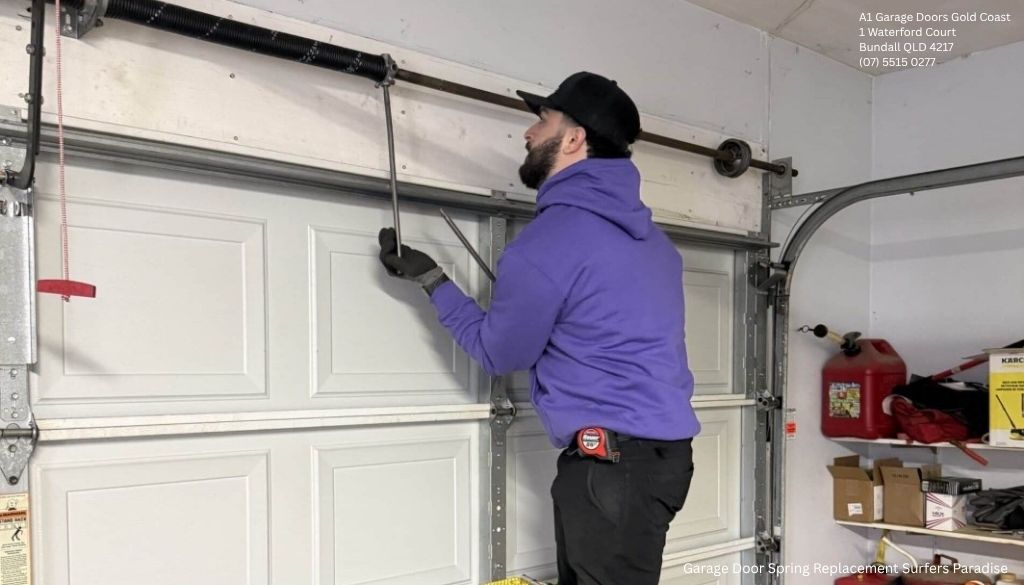
- Listen for creaking or thumping noises: These can signal metal fatigue, rust, or weakening in torsion or extension springs.
- Improper tension adjustment: Springs wound too tight or too loose cause excessive noise and uneven door travel.
- Professional spring winding: Adjusting spring tension is hazardous and should only be done by licensed technicians to prevent injury.
- Replace visibly worn or broken springs: Rusty, cracked, or broken springs must be swapped out promptly to restore quiet and safe functionality.
- Confirm safety cables are intact: For extension springs, safety cables prevent accidents, so inspect them regularly.
Because of the risks involved, expert inspection and repair of springs is strongly recommended for any noise-related concerns linked to these components.
How Does the Garage Door Opener Affect Noise Levels?
The garage door opener’s design and condition heavily impact overall noise during door operation:
- Chain drive openers: Tend to be louder because metal chains transmit more vibration and noise compared to belt drives.
- Belt drive openers: Feature a rubber belt that absorbs noise, providing quieter operation ideal for attached garages.
- Worn motor gears and control boards: Damaged gears or faulty control boards cause grinding, buzzing, or inconsistent sounds.
- Limit switch settings: Incorrectly calibrated limit switches can force the motor to strain against the door, increasing noise and mechanical wear.
- Operator arm and mounting: Ensure the operator arm is securely mounted and lubricated to reduce rattling noises.
- Remote control and wireless receiver: While less noisy components, keeping them powered and functional ensures smooth door travel and reduces abrupt stops that may create noise.
Upgrading to newer or belt drive openers and maintaining opener components significantly reduces operational noise.
How to Align Garage Door Tracks to Eliminate Noise?
Proper track alignment is vital to prevent grinding, scraping, or thumping noises caused by rollers binding or catching:
- Inspect tracks: Check for any dents, bends, or debris obstructing the rail system before adjusting.
- Loosen mounting brackets: Slightly loosen bolts holding the tracks to the door frame to allow repositioning.
- Realign tracks: Tap tracks gently until straight and parallel using a level to ensure vertical accuracy.
- Retighten fasteners: Secure bolts firmly once alignment is correct.
- Test roller movement: Confirm rollers traverse the tracks smoothly without binding or resistance.
- Check door balance: After alignment, verify that the door opens and closes evenly without vibration.
Well-aligned tracks reduce noise, protect rollers and panels from damage, and extend hardware longevity.
What Role Does Weatherstripping and Door Seals Play in Noise Reduction?
Besides insulating against temperature changes, weatherstripping and door Burleigh heads garage door services seals contribute significantly to noise control:
- Absorbing vibration: Rubber or vinyl seals cushion impacts as the door closes, reducing rattling sounds.
- Preventing draft noise: Seals stop wind gusts from causing chattering around the door frame during storms.
- Replacing worn seals: Old or missing weatherstripping leads to gaps that amplify noise transmission.
- Enhancing energy efficiency: Improved seals provide dual benefits — noise reduction and lower heating or cooling costs.
Regular inspection and replacement of weatherstripping is an easy, cost-effective way to enhance a quieter garage environment.
When to Call a Professional for Garage Door Noise Issues?
Certain noise problems require expert knowledge and specialised tools to ensure safety and lasting repairs:
- Spring winding and tension adjustments: The high tension in torsion and extension springs poses significant injury risks.
- Persistent grinding or motor noises: May necessitate opener motor or gear replacement beyond DIY capabilities.
- Broken cable drums or faulty control boards: Require precise diagnosis and component-specific repair or replacement.
- Unbalanced doors or irregular vibration: Can indicate deeper issues needing professional evaluation to avoid unsafe operation.
- Failure of DIY fixes: If routine maintenance and adjustments don’t resolve noise issues, consult a certified technician.
Hiring trained garage door repair specialists ensures safe handling of complex components and reliable noise mitigation.
How Can Soundproofing Enhance Garage Door Noise Control?
In addition to mechanical fixes, soundproofing methods can drastically reduce noise both inside and outside the garage:
- Adding insulation panels: Installing foam or fiberglass insulation behind door panels dampens resonance and vibration sounds.
- Sealing gaps and cracks: Filling spaces around the door frame with weatherstripping or caulking prevents sound leakage.
- Using thicker door panels: Heavier materials absorb more noise, creating a quieter barrier.
- Applying noise reduction mats or rugs: Placing sound-absorbing materials on garage floors or walls complements door soundproofing.
Incorporating these noise reduction techniques creates a more peaceful home environment, especially for attached garages.
Preventive Tips for Long-Term Garage Door Quietness
Maintaining a long-term noise-free garage door requires consistent care and attention. Follow these preventative tips:
- Follow a biannual maintenance schedule: Set reminders to clean, lubricate, and inspect all garage door components twice a year.
- Remove rust promptly: Use wire brushes and rust removers periodically, then apply inhibitors to prevent recurrence.
- Apply lubricants effectively: Focus grease application on rollers, hinges, pulleys, and springs for smooth movement.
- Regularly check bolts and brackets: Keep all fasteners tight to prevent vibration and rattling noises.
- Schedule professional inspections: Annual expert check-ups catch early signs of metal fatigue or motor wear before noise develops.
Consistent preventative care saves money, avoids noise disruptions, and extends your garage door’s operational life.
Frequently Asked Questions (FAQ)
Q1: Why is my garage door making a loud squeaking noise?
A: This is usually caused by dry or rusty door rollers and hinges. Applying the correct lubricants and removing rust typically resolves the squeaking.Q2: Can I lubricate my garage door springs myself?
A: While light lubrication is generally safe, spring tension adjustment or winding should only be performed by professionals due to safety risks.Q3: What type of garage door opener is the quietest?
A: Belt drive openers are quieter than chain drives because rubber belts absorb noise better than metal chains.Q4: How often should I perform maintenance on my garage door?
A: Ideally, maintenance like cleaning, lubrication, and tightening components should happen twice a year.Q5: Can misaligned tracks cause damage to my garage door?
A: Yes, misaligned tracks increase friction and wear on rollers and door panels, leading to premature damage and increased noise.Q6: What safety precautions should I take when repairing garage door noise problems?
A: Always disconnect power before performing maintenance, never attempt spring adjustments yourself, and wear protective gloves and eye protection when handling metal parts. In conclusion, identifying and fixing garage door noise issues involves understanding the common causes, diagnosing specific symptoms, conducting regular maintenance, and knowing when to call professionals. By following these guidelines and implementing preventive measures, homeowners can enjoy a quieter, safer, and longer-lasting garage door system. Don’t let disruptive noise disturb your home—start your noise troubleshooting journey today!